
Where the medicine of the future is already the present
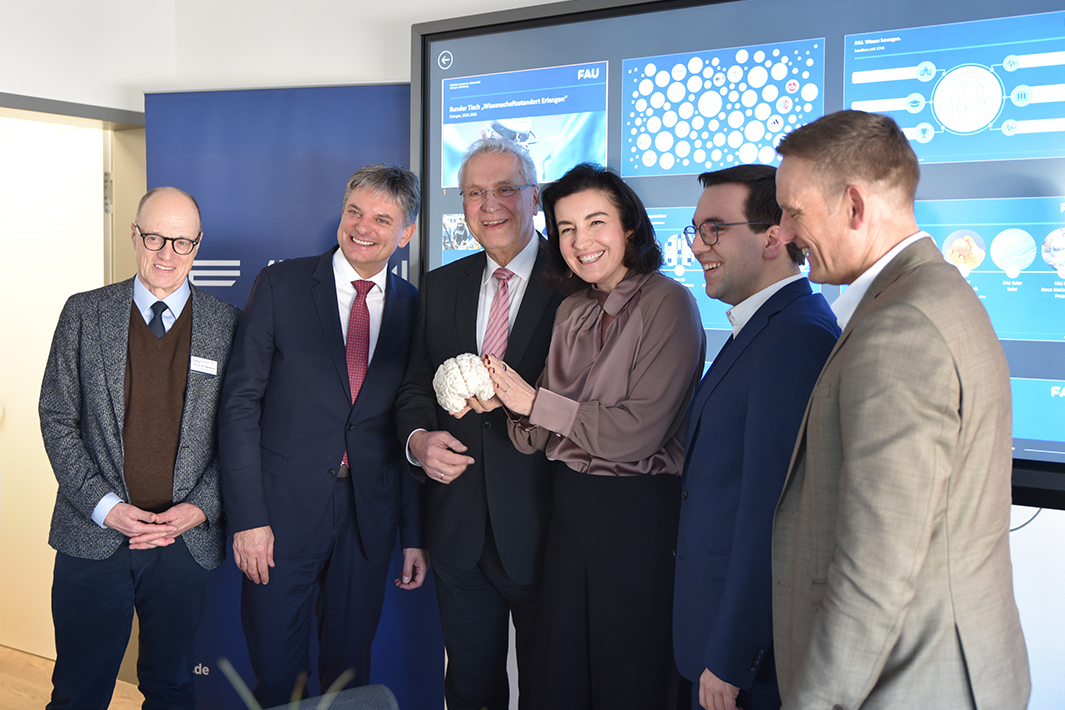
In January, FAU Erlangen-Nürnberg and Universitätsklinikum Erlangen hosted a round table discussion. Federal Research Minister Dorothee Bär and Bavarian Interior Minister Joachim Herrmann were also in attendance.
‘Medicine of the Future’ is the motto for Science Year 2026. There is no better place to look into the future of medicine than in Erlangen, a centre of science and research home to Universitätsklinikum Erlangen, Friedrich-Alexander-Universittä Erlangen-Nürnberg (FAU), Medical Valley and numerous medical technology companies. That is why Dr Konrad Körner, Member of the German Bundestag for Erlangen, together with FAU President Prof. Dr Joachim Hornegger and Erlangen's Second Mayor Jörg Volleth, invited the Federal Minister for Research, Technology and Space Dorothee Bär, Bavaria's Minister of the Interior Joachim Herrmann and representatives from research and industry to a round table discussion at the Universitätsklinikum Erlangen.
The occasion for the round table discussion was the High-Tech Agenda Germany, with which the federal government is setting the course for Germany's technological future. The Nuremberg Metropolitan Region , where cutting-edge research, innovative developments and medical excellence are closely interlinked, is one of the most important and productive regions in Germany in this regard. This made Erlangen, as a centre of science and research, particularly well suited for bringing together leading representatives from research, medicine, business and politics for direct exchange.
High-tech made at Universitätsklinikum Erlangen
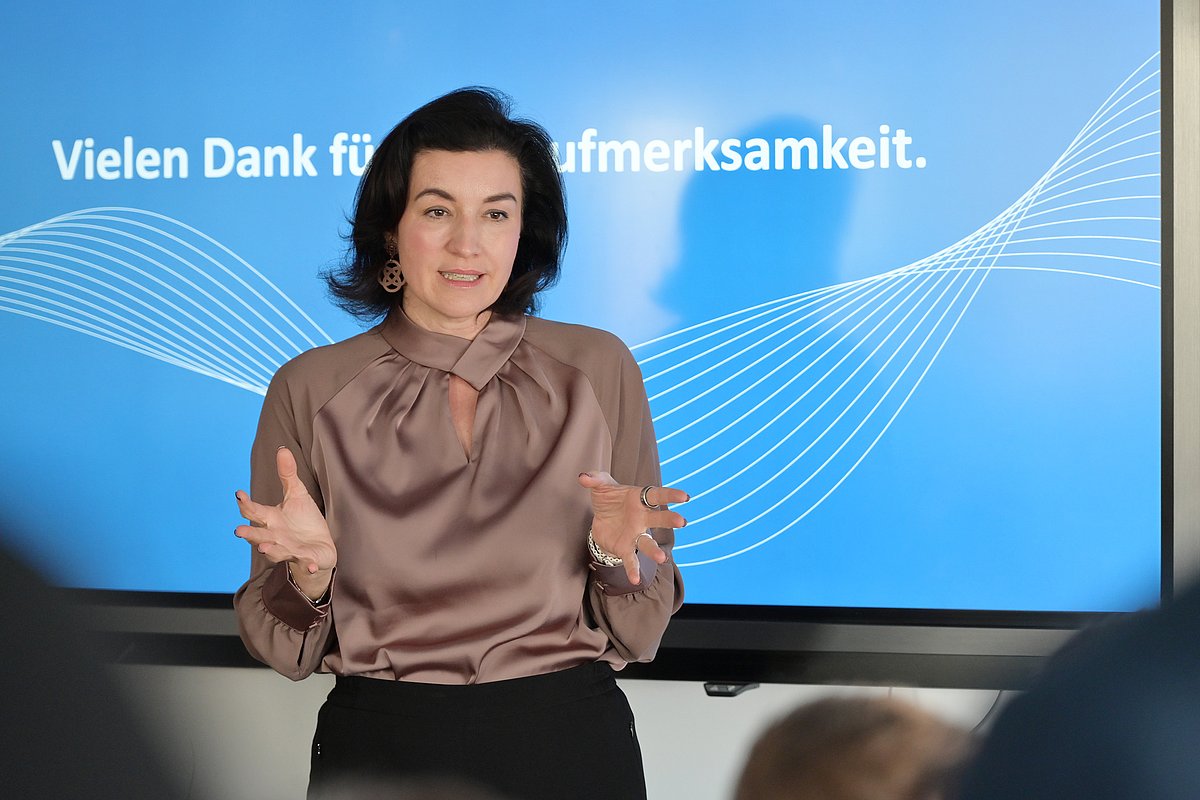
After Prof. Hornegger and Dr Körner welcomed the attendees and Federal Research Minister Dorothee Bär gave a speech, Erlangen's Deputy Mayor Jörg Volleth introduced the event. This was followed by short presentations from two research groups.
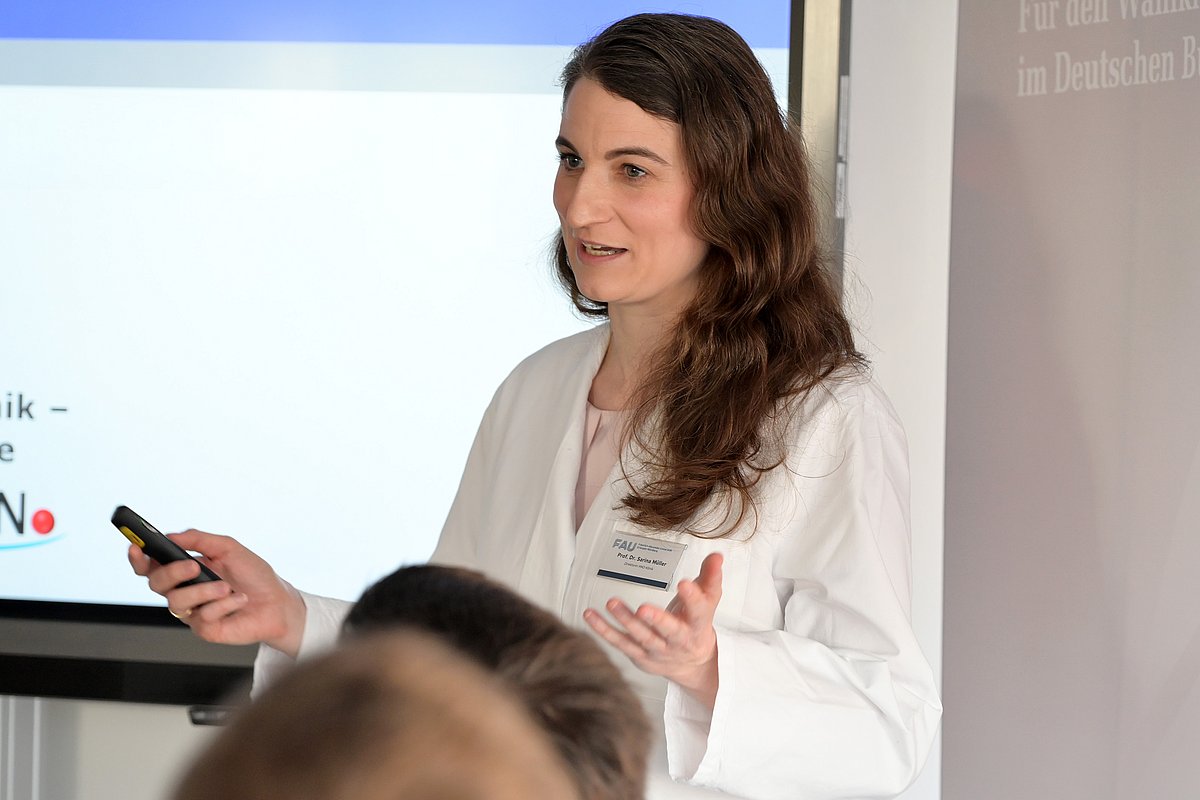
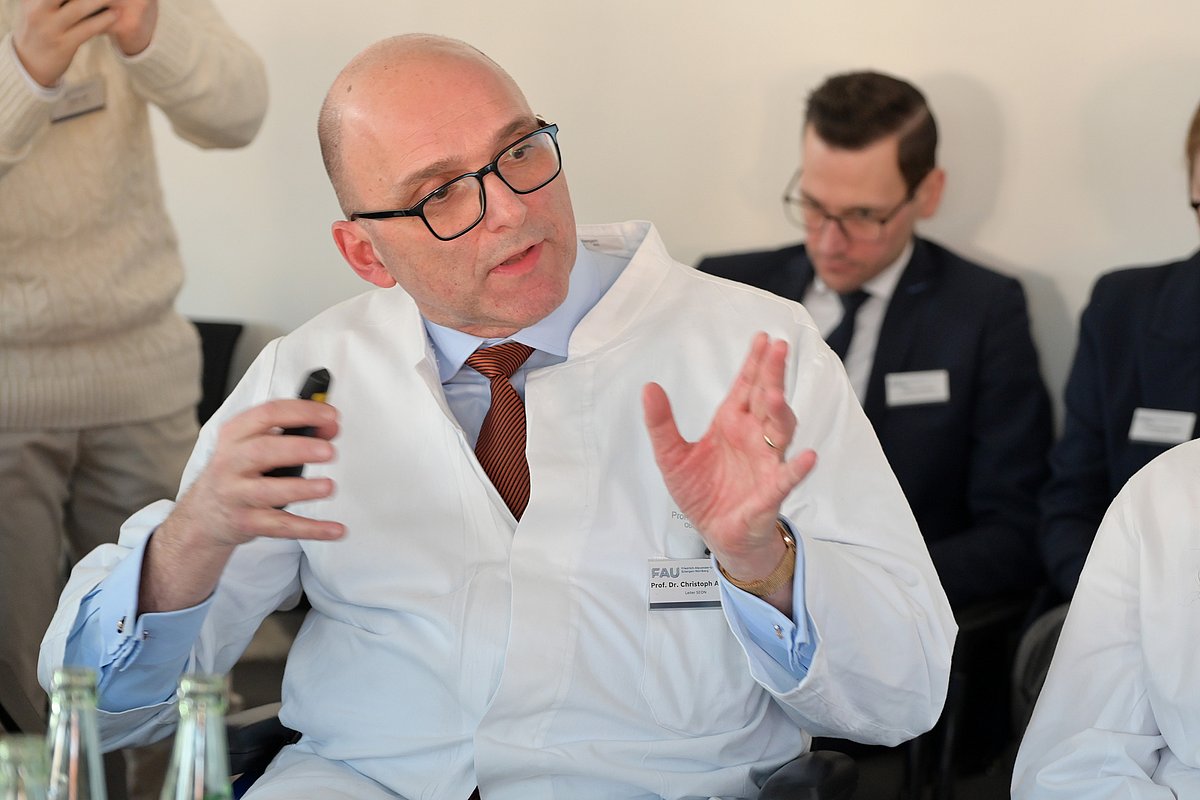
The first to speak was Prof. Dr. Sarina Müller, Director of the Ear, Nose and Throat Clinic – Head and Neck Surgery at Universitätsklinikum Erlangen, Prof. Dr. Roland Nagy from the FAU Chair of Applied Quantum Technologies, and Prof. Dr. Christoph Alexiou, Head of the Section for Experimental Oncology and Nanomedicine (SEON) at the ENT Clinic of Universitätsklinikum Erlangen. Prof. Müller wants to use nano and quantum medicine to enable faster diagnosis and more precise forms of therapy that are still affordable. For example, state-of-the-art quantum sensor technology can be used to distinguish cancer cells from healthy cells based on their respective magnetic fields. This involves the use of special magnetically enriched nanoparticles, known as superparamagnetic iron oxide particles. ‘This technology could also be used in chemotherapy,’ explained Prof. Alexiou, ‘to deliver the drug directly to the tumour, as the iron oxide particles can also be controlled in this way. This improves the efficiency of the therapy and reduces side effects.’ This technology could also help in the identification of sepsis.
This was followed by a presentation by Prof. Dr. Silvia Budday. She and her colleagues Prof. Dr. Oliver Schnell, Director of the Neurosurgery Clinic at Universitätsklinikum Erlangen, and Dr. Daniel Delev, Deputy Director of Neurosurgery, are researching the human brain in collaboration with doctors, neuroscientists, biologists and engineers at FAU. They subject our most complex organ to mechanical analyses and use the results to develop computer models of the brain that help to improve diagnostic and treatment methods. ‘Measuring mechanical properties before and during surgery makes it possible to “visualise” diseased tissue that would otherwise be impossible to identify,’ explained Prof. Budday. ‘This allows it to be removed in a targeted and safe manner.’ Mechanics-based computer simulations could also predict individual disease progression in order to better understand the cause of the disease and facilitate decisions about the optimal treatment.
Concluding discussion
Following the presentations, the experts in attendance discussed the challenges that lie ahead and the opportunities that will arise in the coming years for Germany as a centre of science in general and for Erlangen in particular. The participants in the discussion focused on technological and medical developments and the region's position in international competition, as well as the question of what impetus would be necessary for Germany to continue to stand for technological excellence and cutting-edge innovation worldwide. Representatives from research and industry pointed out in the discussion that the research institutions and companies in the metropolitan region are indeed world-class, but that further efforts are needed to ensure that this remains the case in the future or is even expanded further. This applies in particular to the promotion of start-ups and flagship projects.
Voices from politics, Universitätsklinikum Erlangen and FAU:
Federal Research Minister Dorothee Bär: "The visit to FAU impressively demonstrates that the medicine of the future has long been a reality here. The science hub of Erlangen is home to medical technology that strengthens Germany's position in the development of excellent technology and quickly translates research findings into concrete applications for patients. Close and trusting cooperation between excellent science and innovative industry is crucial for continued success. We want to consistently continue along this path and thus strengthen Germany as a location together. Biotechnology is one of the six key technologies of Germany's High-Tech Agenda, with which we want to make our country a top technology nation."
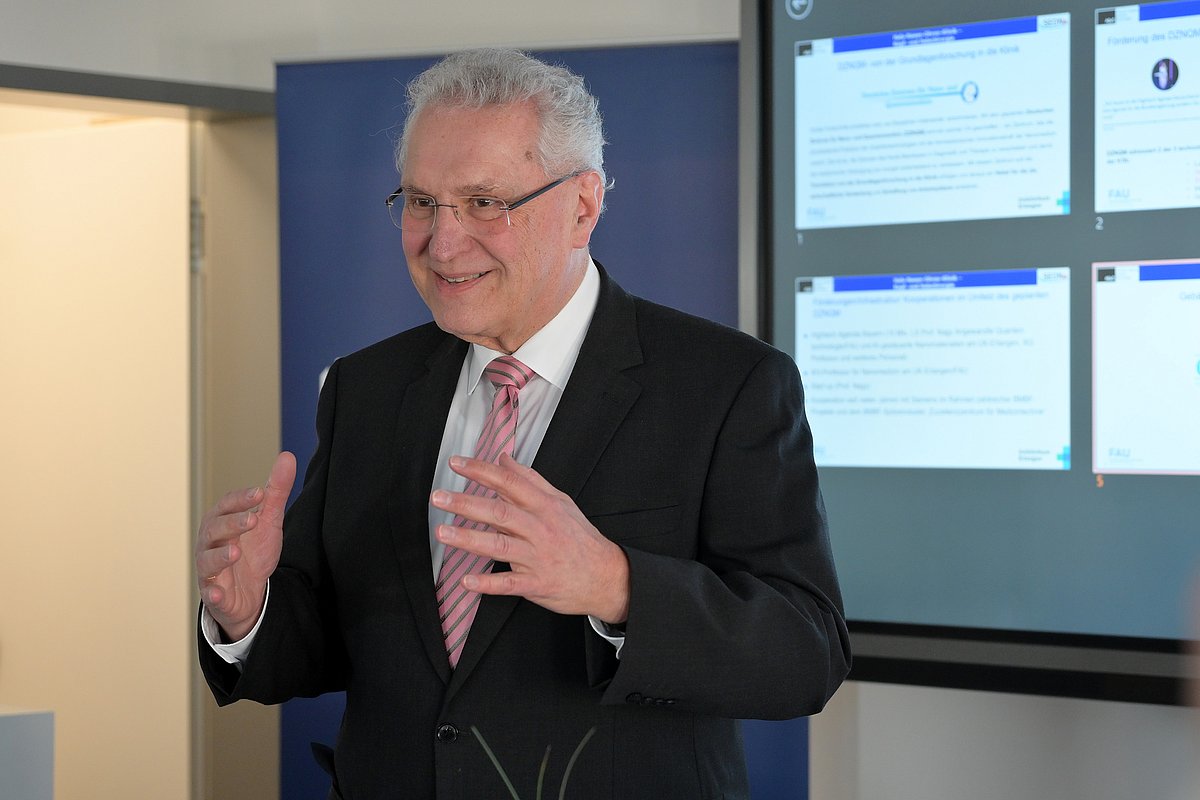
Bavaria's Interior Minister Joachim Herrmann: ‘I am delighted that the Federal Minister of Research has come here to find out about the main areas of research at the University of Erlangen. This means we continue to have very good prospects of attracting substantial research funding to Bavaria, precisely because the work being done here in areas such as cancer research and brain research is world-class. We want to continue to drive this development forward.’
Prof. Dr. Sarina Müller, Director of the ENT Clinic at Universitätsklinikum Erlangen: ‘Detecting cancer even earlier and more accurately is one of the greatest medical challenges of the future. At Universitätsklinikum Erlangen, we are already working on significantly improving current diagnosis and treatment options for oncological diseases with the help of highly sensitive quantum sensors.’
Prof. Dr. Christoph Alexiou, Head of SEON: "Great progress is made where disciplines merge. The planned German Centre for Nano- and Quantum Medicine (DZNQM) at Universitätsklinikum Erlangen will create such a place – a centre that combines the physical precision of quantum technologies with the biomedical innovative power of nanomedicine. The aim is to push the boundaries of what is currently possible in diagnostics and therapy, thereby significantly improving the medical care of tomorrow. This centre is intended to facilitate the translation of basic research into clinical practice, thereby creating leverage for economic exploitation and job creation."
Prof. Dr Roland Nagy, FAU Chair of Applied Quantum Technologies: "The interdisciplinary combination of nanomedicine and quantum sensor technology represents a novel field of research with disruptive potential for medical technology. To tap into this potential, we intend to establish a German Centre for Nano- and Quantum Medicine (DZNQM). Such a centre is unique worldwide and offers Bavaria and the Federal Republic of Germany the opportunity to take the leading position in this field of research. The Erlangen location offers the ideal conditions for the DZNQM due to its excellent research environment. Research at the centre will focus on solving key issues in healthcare that cannot currently be adequately addressed with conventional technologies. We hope that the DZNQM will make a significant contribution to both society and Bavaria as a business location."
FAU President Prof. Dr. Joachim Hornegger: "Whether quantum technologies, artificial intelligence, sustainability or health research – the key technologies of Germany's High-Tech Agenda are also at the heart of FAU. In keeping with the Science Year 2026, ‘Medicine of the Future’, we were able to impressively demonstrate to the Federal Minister for Research, Technology and Space how the innovative ideas and passionate research of our researchers are making decisive advances in health research, early detection and prevention. I am particularly pleased with the Minister's enthusiastic response to our CAR-T cell therapy, which can cure the autoimmune disease lupus – impressive proof of how FAU is making a difference and giving people back some of their quality of life."
Dr Konrad Körner, Member of the Bundestag: ‘Erlangen as a centre of science: Germany's smallest city shines out into the whole world. The presentations also gave the Minister of Research another opportunity to see where the future of medicine in Erlangen is already heading. I am also delighted that today's round table has strengthened the links between non-university and university research institutions.’
Erlangen's Deputy Mayor Jörg Volleth: "Erlangen has always been a strong economic and scientific location. With FAU Erlangen-Nürnberg, the Universitätsklinikum, Siemens and a growing number of innovative start-ups, we have the best conditions here to bring the goals of Germany's High-Tech Agenda to life. The “Erlangen Science Location Round Table” offers the opportunity to bring together the key players and jointly provide new impetus. Federal Minister Dorothee Bär's visit to Erlangen shows that local authorities and innovation locations are being listened to and that future policy can only be successful through dialogue between the federal government, the states and local authorities."
In our #FutureMedicine series, we will be showcasing the innovations emerging from the medical technology sector over the coming weeks, with a particular focus on women's health.
You can find all the articles in the series here:

© FAU/Boris Mijat
© Franziska Männel/Uniklinikum Erlangen
© Franziska Männel/Uniklinikum Erlangen
© Franziska Männel/Uniklinikum Erlangen
© Franziska Männel/Uniklinikum Erlangen