
EndoKI: AI-trained ultrasound for endometriosis
It is estimated that one in every 10 to 15 women of childbearing age suffers from endometriosis, yet research into the condition remains insufficient to this day. This is precisely where the “EndoKI” project comes in. An interdisciplinary team of seven female researchers from FAU Erlangen-Nuremberg, Erlangen University Hospital, the University of Würzburg and TUM has set itself the goal of significantly improving diagnostics. Through the use of AI, imaging techniques such as ultrasound and MRI are to be combined into a holistic 3D patient model. The aim: improved non-invasive diagnostics – and thus better treatment options for those affected.
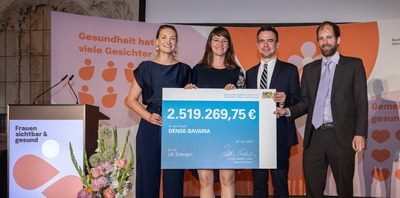
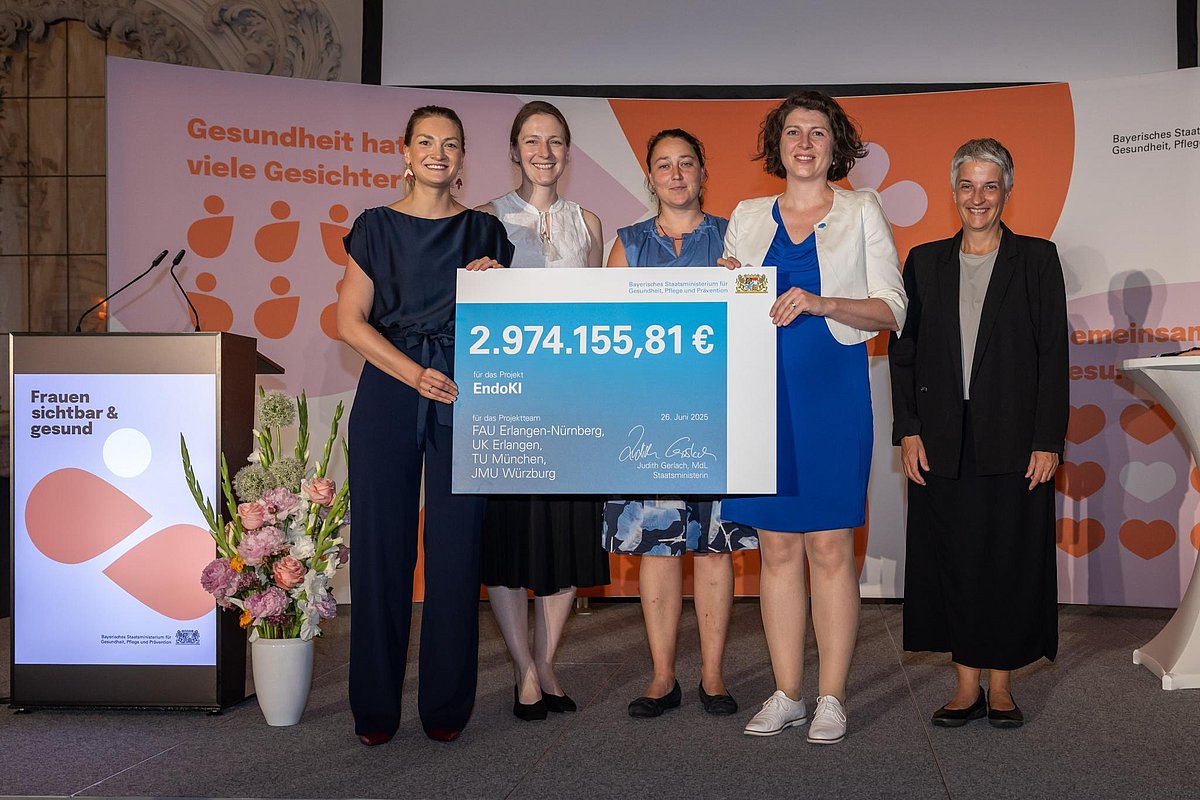
Endometriosis is a gynaecological condition that is largely unknown, even though it is estimated that one in every 10 to 15 women of childbearing age in Germany suffers from it. A multidisciplinary team of female researchers from Erlangen University Hospital and Friedrich-Alexander University Erlangen-Nuremberg (FAU) is investigating diagnostic and treatment options for this gynaecological condition with a three-million-euro grant from the Bavarian State Ministry of Health, Care and Prevention.
Endometriosis is a chronic, hormone-dependent condition which, due to its varied phenotypic manifestations, is also referred to as a ‘chameleon disease’. It usually presents as severe pain in the lower abdomen during menstruation. In endometriosis, tissue resembling the lining of the womb grows in areas outside the uterine lining at various sites in the body, particularly in the pelvis, and can lead to functional disturbances during bowel movements and urination. The condition is also associated with infertility, as well as anxiety disorders and depression. The number of unreported cases of endometriosis is high due to the wide variety of symptoms.
Create a 3D patient model
The aim of the new study is to improve non-invasive diagnostics and to support the effective treatment of patients with endometriosis. The novelty of the research approach lies in using AI methods to integrate various imaging techniques, such as ultrasound and MRI, into a holistic 3D patient model, which is then supplemented with further surgical and post-operative data. Ultimately, the aim is to assess whether this improves the situation for patients as well as for clinics.
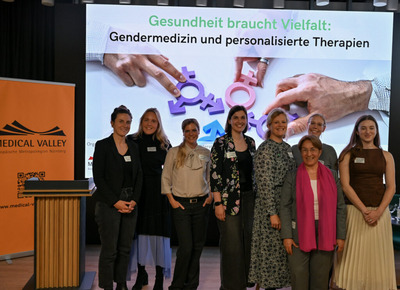
Five female researchers from Erlangen University Hospital and FAU, along with two partners from the University of Würzburg and the Technical University of Munich, have joined forces in the EndoKI (Endometriosis and Artificial Intelligence) project to conduct interdisciplinary research into the disease ‘by women, for women’. The three-year project is funded as part of the Digital and Innovative Health and Care Projects (BayDiGuP) and the thematic area of women’s health and artificial intelligence.
On average, it has taken eight years to reach a diagnosis
For Prof. Dr Franziska Mathis-Ullrich, Professor of Surgical Robotics at the Department of Artificial Intelligence in Biomedical Engineering and project spokesperson, it is important “to raise awareness among women, but also within society, of this little-known and often undiagnosed condition that affects so many people.” The seven female researchers come from the fields of AI, medical technology, computer science, gynaecology and gender studies. “We want to specifically collect data from at least 300 patients and find out how the diagnosis can be made earlier and in a more standardised way using imaging, in order to prevent chronic pain,” says Prof. Mathis-Ullrich. This is because, according to studies, the inconsistent clinical presentation means it takes an average of eight years for endometriosis to be diagnosed at all. The condition is often only discovered during an endoscopic procedure. It is treated with painkillers, hormone therapies or surgery.
“The data collected is also intended to help reduce the number of operations,” explains Franziska Mathis-Ullrich. Operations related to endometriosis cost just under 100 million euros a year. There is potential here to save 20 million euros a year. “It would be ideal for patients if endoscopic procedures were used not only for diagnosis but also, in the same procedure, for the complete removal of the diseased tissue,” explains Prof. Mathis-Ullrich. Until now, several procedures have sometimes been necessary. EndoKI is intended to enable a faster and more precise diagnosis. “More accurate pre-operative detection of endometriosis lesions could prevent the need for further procedures. This would benefit patients in particular, as every procedure carries a certain risk,” says the researcher.
A database is to be created
In the long term, the aim is to create a pseudonymised database containing, amongst other things, MRI scans and histopathological information to train AI models; the data will also serve as a basis for further research. To improve understanding of the diagnosis and treatment process, a qualitative ethnographic sub-study is also planned, in which gynaecologists, patients and researchers will be interviewed to identify their perspectives and needs. These findings are intended to inform recommendations for guidelines on the diagnosis and treatment of endometriosis – ideally also for UN organisations such as the WHO.
“Through our study, we also want to raise awareness of the condition among medical professionals.” Indeed, the aim of the project is by no means for the findings to remain confined to the scientific community, but rather to foster public awareness of women’s health. A conference on endometriosis is therefore planned for 2028 at FAU and Erlangen University Hospital – for medical professionals, researchers and those affected. “I have rarely seen a project involving scientists from such diverse disciplines start with such high motivation. Our hearts as researchers are in this,” says Franziska Mathis-Ullrich.

© Bayerisches Staatsministerium für Gesundheit, Pflege und Prävention